
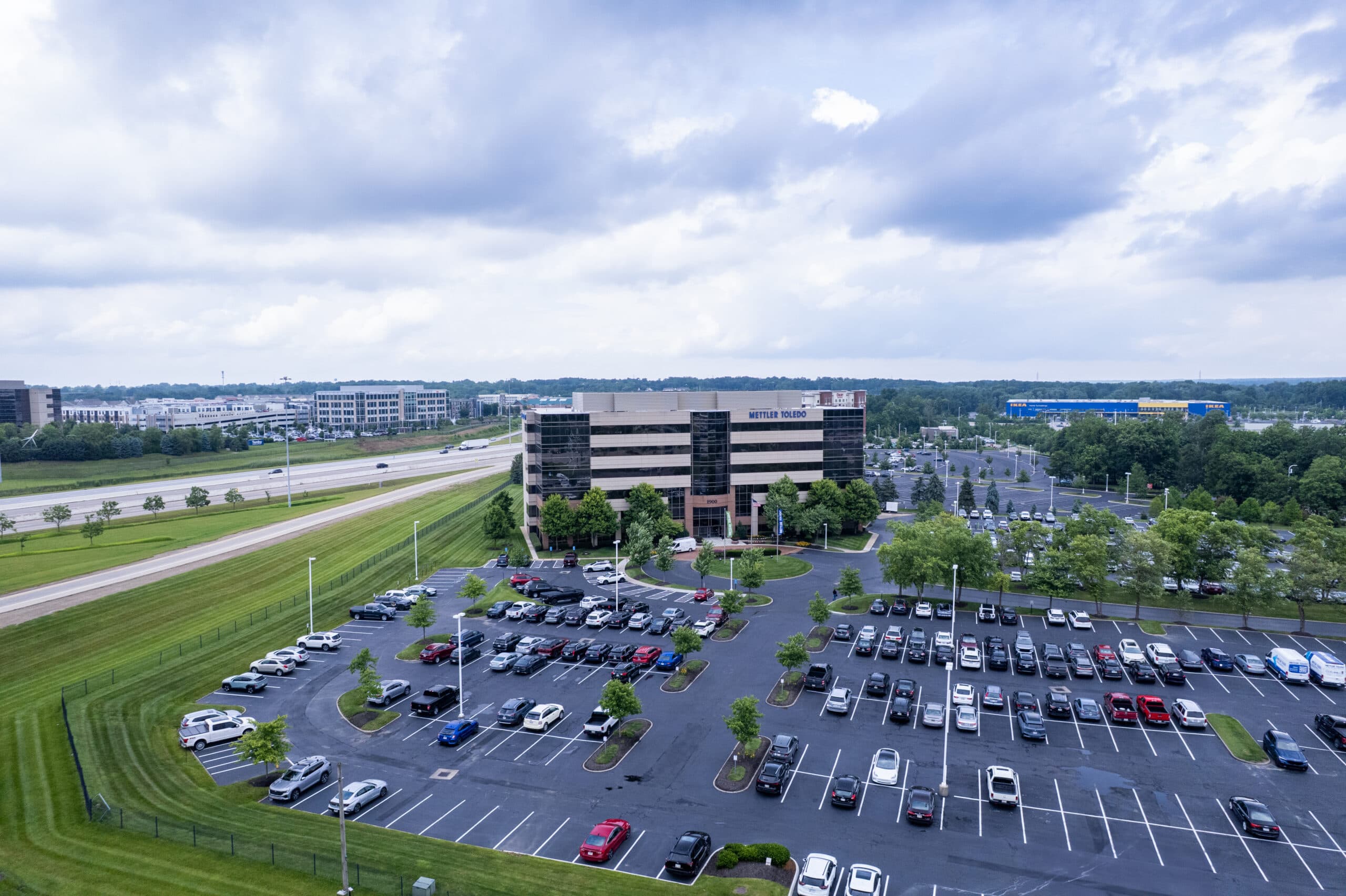
How to Manage Parking in Commercial Properties
Written on March 2nd, 2026 | Updated on March 17th, 2026
Parking is a routine task, so managing lots and garages may seem like a low-priority task. However, when inefficiencies arise, they’re likely to get noticed quickly and can have a significant impact on tenant retention.
You can use parking management techniques to analyze driver behavior and develop better solutions based on those insights. This guide can help you understand how to make the most of your available space so drivers find space safely and easily.
Why Parking Management Matters
Parking isn’t just about finding places to put vehicles. The state of your lot reflects how you value your employees’ and visitors’ comfort and your commitment to quality. A poorly planned lot or garage suggests a lack of attention to detail, which is why it’s important to devote time and resources to proper management. Parking is also an important part of commercial real estate investment because it affects who can access your property. Aside from spacing and layout, you must also consider factors like lighting, security and policy enforcement.
Common Parking Issues on Commercial Properties
Limited parking: You may face parking issues if you have an older lot that was developed with a lower capacity. Addressing that issue may require re-striping to optimize the layout or entering into shared parking agreements with neighbors.
Parking spot size constraints: Parking spaces on commercial properties are restricted by zoning regulations and lot coverage limits. Implementing staggered parking offers a solution.
Unauthorized parking: If your commercial property is in a prime location near other businesses, you may encounter unwanted parking guests. Install clear signage or use gates to control access.
Tenant conflicts: Overlapping employee and visitor usage and ambiguous lease language can result in inefficient parking allocation. Designating employee and guest sections supports operational capacity.
Poor lot conditions: Older facilities, costly repairs and high vehicle loads can make it difficult to update your parking facility. Preventive maintenance, like sealcoating and crack sealing are crucial for parking management.
How to Resolve Commercial Property Parking Issues
Establish Clear Parking Policies
Enforcing your commercial building parking rules allows you to promote a positive experience for those who visit your property. Outline parking regulations in lease agreements to avoid tenant frustration and violations. Displaying policies by entrances, exits and other high-traffic areas promotes transparency, too. Assign staff to manage parking regulations to maintain compliance and assist drivers.
Improve Parking Efficiency
Making the most of your commercial parking facilities requires assessment and planning. Document vehicle volume by day, time and season to determine how to optimize available space. Reduce congestion by separating entry and exit points and ensuring they’re wide enough to accommodate larger vehicles.
Establishing a traffic pattern will also eliminate confusion. You can use directional arrows or implement one-way lanes to support smooth movement. Be mindful of industry standards when painting parking spots for standard and compact vehicles, as that directly impacts your compliance with ADA standards. Include accessible parking spaces to accommodate drivers and protect yourself from fines.
Monitor Parking
Creating a structured parking system helps maintain fair access and reduce liability. Provide clear policies regarding parking authorization, towing regulations and violation consequences. It’s also important to give reasonable notice and warning systems so tenants and guests understand the start dates and local legal standards.
When implementing parking monitoring, consider the following options:
- On-site monitoring: Routine inspections, visual verification and documentation allow you to actively deter misuse.
- Credential systems: You can issue parking permits and decals to maintain vehicle registration and track distribution.
- Technology-based control: There are a variety of technologically advanced solutions, including license plate recognition monitoring that’s useful for managing larger parking lots and garages.
Utilize Technology
You can track usage patterns and enforce parking regulations with ease with technology-based solutions. Parking management software gives you access to a control system that functions as a monitoring and reporting tool.
You can track:
- Real-time occupancy rates
- License plate databases
- Space allocation
- Violation history
- Dispute documentation
Digital permits are another option that simplifies control and accessibility. Tenants and guests can use an online portal to register their vehicle, preventing others from duplicating or stealing their credentials. That’s helpful for mixed-use and multi-family properties.
Commercial Property Management in Columbus, Ohio
Outsourcing property management, including parking oversight, gives you the freedom to optimize and grow your investment portfolio. DRK and Company employs a team of experts who know the Columbus real estate market like the back of their hands. Contact us to learn about our services and discover how we can help you improve your assets’ financial and functional performance.
You May Also Like



470 Olde Worthington Road, Suite 101
Westerville, OH 43082
© 2026 DRK and Company. All Rights Reserved.