
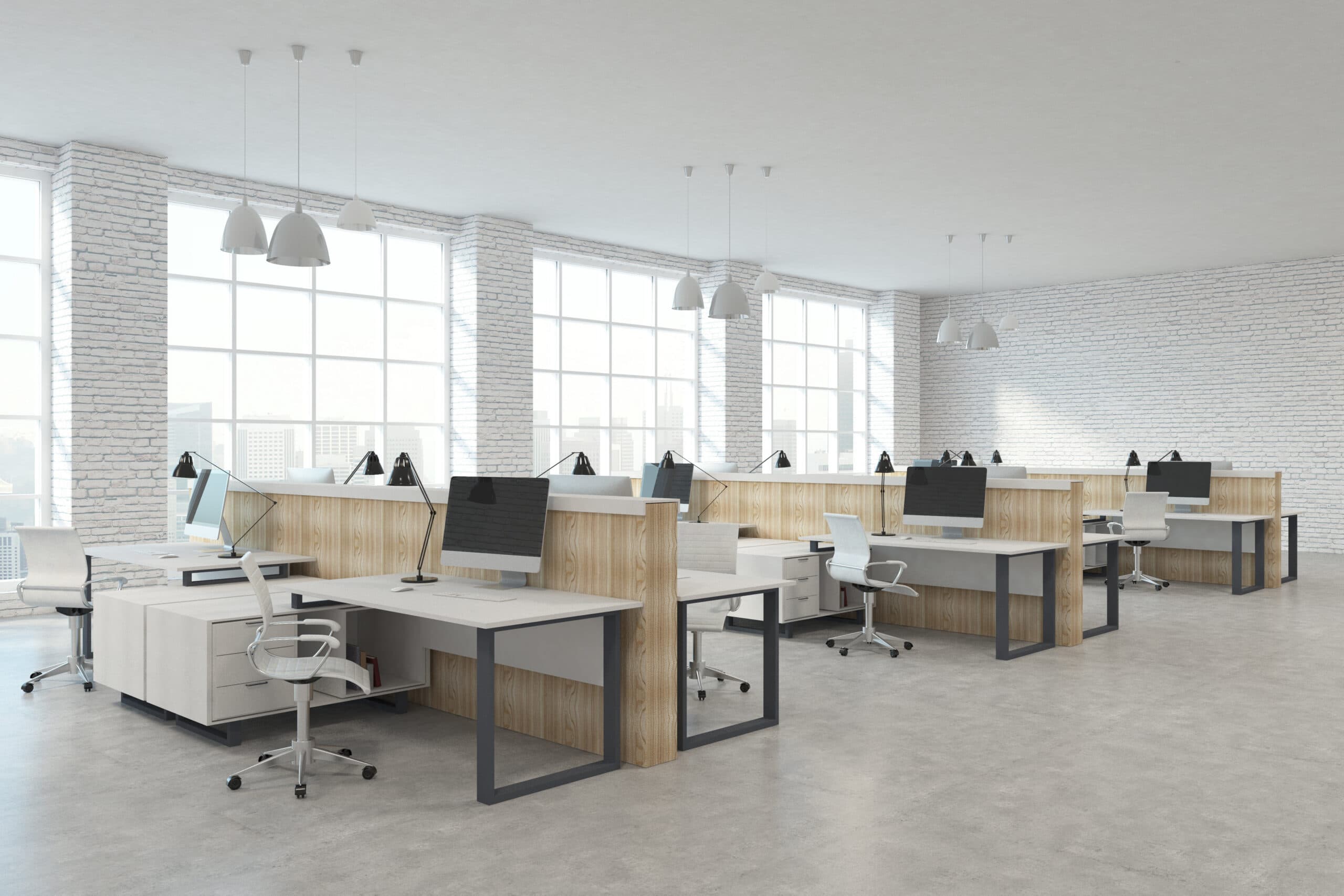
Flex, Coworking and Traditional Office Space: What’s the Difference?
Written on May 20th, 2026 | Updated on May 22nd, 2026
The last 20 years have altered how professionals view the workspace. While traditional offices have dominated the demand for decades, coworking and flex spaces have grown in popularity. That’s due in part to employee demand for flexible working conditions and a desire to manage overhead costs.
So, what’s the difference between those three types of commercial offices? Read on to find out.
What is Traditional Office Space?
A traditional office space is a privately-leased building that has private offices, cubicles, conference rooms and meeting areas. It’s a private space that offers tenants stability and control over their work environment. Some tenants lease their properties while others own them outright.
Traditional offices typically have longer lease terms, ranging from three to 10 years. That provides more fixed costs, which promotes long-term financial stability for renters and property owners.
Some of the perks of investing in a traditional commercial office include:
- Long-term cash flow
- Higher rental rates
- Location-specific value growth
- Fewer tenants to manage
- Triple net lease opportunities
Who Uses Traditional Office Space?
Established businesses: Some companies have specific operational needs that can only be met by traditional offices. If a company requires a specialized layout or wants to create a branded environment to enhance their professional culture, they’ll need a dedicated space of their own.
Private companies: Security companies, legal firms, financial entities and healthcare agencies require privacy due to the sensitive nature of their work. Those businesses will need a space where they can keep their data secure without worrying about other agencies.
Government agencies: City, state and federal government entities are common commercial office tenants because they require control over their spaces to maintain security while providing public services.
What is Coworking Space?
A coworking space is a shared professional environment that allows individuals and teams from different companies to work in a shared environment. Tenants can rent individual desks or offices with access to common areas and conference rooms. It’s a collaborative setting that is intended for those companies and individuals who have specific technological requirements and prefer flexible lease terms.
As an investor, you can rent out coworking space on a monthly or yearly basis, which is an attractive option for companies that anticipate growth or want to reduce operating costs. You also don’t have to worry about managing an empty building if you can’t find long-term tenants. Coworking spaces are rented out via memberships or passes that allow you to offer various arrangements outside of standard square footage.
Who Uses Coworking Space?
Freelancers: Not all tenants running solo operations want or need an entire office to themselves. A coworking space provides them with a professional environment where they can meet clients and take calls. Hot desk memberships are ideal for these individuals, giving them a place to work away from their home or public places like coffee shops.
Startups: A coworking office reduces the upfront leasing costs for startups, especially if they’re exploring a new market. This type of commercial space allows for collaboration between potential investors and partners who require shared infrastructure, IT setup and amenities.
Nonprofits: Charitable organizations must balance a professional appearance without appearing wasteful. A coworking space gives them room to meet campaign needs and provides their employees with a stable work environment while managing expenses.
Small teams: Some companies don’t employ enough staff to warrant renting a traditional office building. Using a coworking space gives them a more affordable solution that provides them with the ideal square footage to suit their operations.
What is Commercial Flex Space?
A commercial flex space is a combination of different types of work environments, such as offices, cubicles and warehouses. They function as a hub where businesses and corporations can conduct all aspects of their operations under one roof. They offer adaptable floor plans that tenants can customize to suit their needs. Lease terms are also more flexible than traditional office spaces.
Flex space membership varies by lease agreement type. Businesses and individuals can rent desks, private offices, suites or more complex building arrangements. Common flex space amenities include high-speed internet, mail handling, wellness facilities, secure building access, networking opportunities and concierge services.
Who Uses Flex Space?
Growing businesses: Flex spaces provide the square footage that expanding businesses need to grow. The collaborative ecosystem also presents opportunities for them to network and build partnerships.
Creative and media companies: Media agencies, marketing companies and designers face fluctuating space needs, depending on the size of their staff and operations. A well-designed flex space gives them access to much-needed community amenities, offices and production areas in one building.
Tech companies: Tech companies can grow quickly, so they need office space that can meet their changing staff numbers. Flex space not only provides them with much-needed offices but also warehouses and industrial space where engineers can focus on production.
Columbus CRE Experts Who Can Help
Local expertise can help you find the right commercial property to suit your portfolio. DRK and Company offers extensive knowledge of the Columbus real estate market and investment services to help you optimize your assets. Contact us to schedule a consultation.
You May Also Like




470 Olde Worthington Road, Suite 101
Westerville, OH 43082
© 2026 DRK and Company. All Rights Reserved.